

An Access Control Server, or ACS, is the issuer-side system used in 3D Secure authentication to verify that the person making an online card payment is the legitimate cardholder.
Akurateco’s PCI DSS-certified payment system supports 3DS authentication across multiple payment methods, providers, and payment flows, helping merchants, PSPs, and fintech businesses process online transactions securely while keeping payment operations flexible and scalable.
What is 3DS?
3DS, also known as 3-D Secure, is a cardholder authentication protocol used in online card payments. It adds an extra verification layer during checkout to confirm the customer’s identity before the transaction continues to authorization.
In payments and fintech, 3DS helps reduce fraud, support liability shift, and meet regulatory requirements such as Strong Customer Authentication under PSD2. That makes it especially important for e-commerce, marketplaces, subscription businesses, fintech platforms, and companies processing cross-border transactions.
What is an Access Control Server?
An Access Control Server, or ACS, is a system used by the card issuer to authenticate the cardholder during a 3D Secure transaction.
The issuer is the bank or financial institution that issued the customer’s payment card. Since the issuer has access to cardholder data, account history, and verification tools, it is responsible for confirming whether the person making the payment is likely to be the real cardholder.
During a 3DS flow, the ACS receives the authentication request, evaluates the transaction, and decides whether the payment can continue without extra customer action or whether additional verification is required.
This verification can include an OTP, mobile banking confirmation, password, biometric check, or another authentication method supported by the issuing bank.
How the Access Control Server Works
The Access Control Server works as part of the 3D Secure authentication flow.
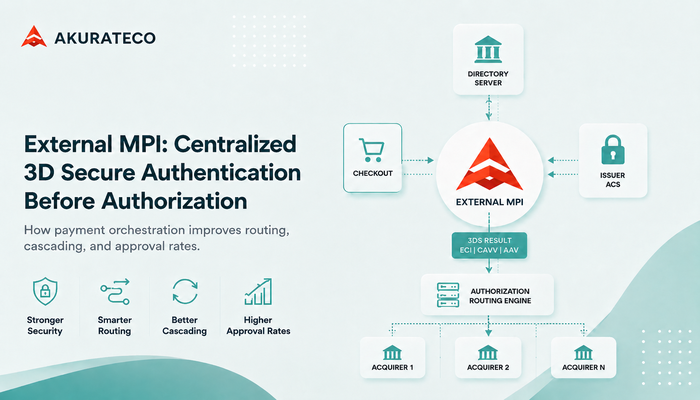
When a customer enters card details and starts an online payment, the payment gateway or 3DS server sends an authentication request through the card scheme’s directory server. The request is then routed to the issuer’s ACS.
The ACS checks transaction data, cardholder information, risk signals, device details, and authentication requirements. Based on this assessment, it can approve the authentication silently or request additional verification from the customer.
If the transaction is considered low risk, the customer may experience a frictionless flow with no extra action required. If more confirmation is needed, the ACS triggers a challenge flow, asking the customer to verify their identity.
Once verification is completed, the ACS sends the authentication result back into the payment flow. The transaction can then proceed to authorization, approval, or decline.
In Akurateco’s payment orchestration infrastructure, 3DS authentication can work together with routing, cascading, tokenization, fraud prevention, and transaction monitoring, helping businesses manage secure payment flows across multiple PSPs and providers.
Why Access Control Server Matters for Your Business
The Access Control Server is important because it directly affects payment security, customer verification, fraud prevention, and checkout experience.
For merchants and payment businesses, ACS-based authentication helps reduce unauthorized card use, lower the risk of fraud-related chargebacks, and support compliance with strong customer authentication requirements.
It also plays an important role in liability shift. When a transaction is successfully authenticated through 3DS, liability for certain fraud-related chargebacks may move from the merchant to the issuer, depending on card scheme rules, region, transaction type, and provider setup.
However, 3DS authentication must be implemented carefully. If the flow is too strict or poorly configured, it can create unnecessary friction and increase cart abandonment. If it is too weak, the business may face higher fraud and dispute risks.
Akurateco helps businesses manage 3DS as part of a wider payment infrastructure. With multi-PSP support, payment orchestration, flexible routing, and transaction visibility, companies can apply authentication where it matters while keeping the checkout process as smooth as possible.
Wrapping Up
An Access Control Server is a core part of the 3D Secure ecosystem. It belongs to the issuer domain and is responsible for verifying whether the person making an online card payment is the legitimate cardholder.
For customers, the ACS may appear as a short verification step during checkout.
For merchants, PSPs, and fintech companies, it helps improve payment security, reduce fraud risk, support liability shift, and meet authentication requirements.
Akurateco’s payment orchestration platform helps businesses manage 3DS authentication together with payment routing, cascading, provider integrations, tokenization, fraud prevention, and reporting.
- Support secure online card payments with 3DS authentication.
- Connect multiple PSPs and providers through one infrastructure.
- Improve payment control with routing, cascading, and transaction monitoring.
- Build flexible payment flows without developing every integration from scratch.