

- What Does Payment Infrastructure Security Include?
- What Is the Security Role of a Payment Gateway?
- Is Payment Orchestration Secure?
- How Does a Payment Hub Approach Security?
- Payment Gateway vs Payment Orchestration vs Payment Hub
- What Security Features Should Payment Infrastructure Include?
- How Should You Evaluate a Payment Infrastructure Provider?
- Common Payment Infrastructure Security Mistakes
- How Akurateco Supports Centralized Payment Security
- Conclusion
Payment security becomes more difficult as an enterprise adds gateways, PSPs, acquirers, alternative payment methods, fraud tools, local entities, and new markets. Protecting the checkout is only one part of the problem. Payment teams must also secure credentials, APIs, routing logic, tokens, provider connections, administrative access, reporting data, and operational workflows.
This is why payment gateway security cannot be evaluated in isolation. A gateway, a payment orchestration platform, and a payment hub perform different functions, create different attack surfaces, and concentrate different types of risk.
None of these architectures is automatically secure or insecure. Their security depends on what data they handle, how access is controlled, where sensitive credentials are stored, how integrations are managed, and how quickly the organization can detect and contain an incident.
What Does Payment Infrastructure Security Include?
Payment infrastructure security protects more than card numbers. It covers payment data, user access, APIs, provider credentials, routing configurations, transaction integrity, system availability, and the operational processes used to manage payments.
A useful security assessment should consider four separate objectives.
The first is confidentiality: preventing unauthorized parties from accessing cardholder data, bank account information, tokens, credentials, and commercially sensitive transaction records.
The second is integrity: ensuring that transaction amounts, beneficiaries, routing decisions, refunds, configuration rules, and payment statuses cannot be changed without authorization.
The third is availability: maintaining payment operations during provider outages, infrastructure failures, denial-of-service attacks, or regional incidents.
The fourth is accountability: recording who accessed the system, changed a routing rule, viewed sensitive information, approved a refund, or modified a provider connection.
PCI DSS establishes baseline requirements for systems that store, process, or transmit cardholder data. However, PCI DSS compliance should be treated as one part of a broader security program rather than proof that an entire payment architecture is secure. PCI DSS v4.0.1 is the active supported version, with all applicable future-dated requirements in effect since March 31, 2025.
What Is the Security Role of a Payment Gateway?
A payment gateway secures the movement of payment information between the checkout, merchant, processor, acquirer, and other payment participants. Its strongest security contribution is limiting direct exposure to raw payment credentials.
A traditional gateway provides a controlled channel through which a merchant submits a payment for authorization. Depending on the integration model, it may host the payment page, collect card data through secure fields, tokenize the credentials, initiate 3D Secure, and transmit authorization requests.
The security profile depends heavily on how the merchant integrates with the gateway.
Hosted payment page
With a hosted payment page, the customer enters payment data on infrastructure controlled by the payment provider. This can reduce the merchant’s direct exposure to cardholder data and potentially simplify parts of its PCI DSS assessment.
However, the merchant still needs to protect:
- Account and administrative access
- Redirect and callback logic
- API credentials
- Payment status notifications
- Website scripts and integrations
- Refund and transaction management workflows
API-based gateway integration
An API integration provides greater checkout and data-flow control, but it may also bring more systems into the cardholder data environment.
Payment teams must evaluate:
- Where card data enters the architecture
- Whether tokenization occurs before the data reaches merchant systems
- How encryption keys and secrets are managed
- How payment API requests are authenticated
- Whether webhook messages are signed and validated
- How replay attacks and duplicate transactions are prevented
- Whether sensitive data can appear in application logs
A secure payment gateway should support encryption, tokenization, secure authentication, access controls, transaction monitoring, and reliable communication with processors and acquirers.
EMV 3-D Secure adds an authentication layer for card-not-present payments by enabling data exchange between the merchant and issuer so the issuer can assess and authenticate the customer. It can strengthen fraud prevention without forcing every transaction through the same challenge flow.
The main limitation of gateway-level security
A gateway can secure its own connection and data flow, but it may not provide consistent control across every other provider in the merchant’s stack.
When an enterprise integrates five PSPs separately, it can end up with:
- Five credential-management processes
- Five administrative permission models
- Five webhook implementations
- Five token formats or vault relationships
- Five monitoring environments
- Five incident-escalation procedures
Each provider may be secure individually while the overall architecture remains fragmented and difficult to govern.
Is Payment Orchestration Secure?
Payment orchestration can improve security by centralizing tokenization, access policies, provider integrations, monitoring, and transaction controls. It also creates a high-value control layer, so isolation, API security, configuration governance, and operational resilience are essential.
A payment orchestration platform sits between the merchant’s applications and multiple gateways, PSPs, acquirers, fraud tools, and payment methods. It provides one integration layer through which the payment team can manage routing, cascading, tokenization, authentication, reporting, and provider performance.
This architecture can strengthen security in several ways.
Fewer direct provider integrations
Instead of giving multiple applications direct access to every PSP, the merchant can connect its systems to one controlled orchestration layer.
This can reduce:
- The number of credentials distributed across applications
- Duplicate integration code
- Inconsistent authentication methods
- Unmonitored provider connections
- Deprecated API versions that remain active
- Sensitive data shared unnecessarily with internal systems
Centralized tokenization
A centralized token strategy can prevent multiple systems from storing provider-specific payment credentials. It can also make it easier to switch or route between processors without repeatedly exposing the original card data.
Tokenization can reduce exposure, but it does not automatically remove every connected system from PCI DSS scope. PCI SSC notes that systems storing, processing, or transmitting account data remain in scope, as can systems connected to the cardholder data environment.
A strong orchestration architecture should make it clear:
- Who operates the token vault
- Where detokenization can occur
- Which services can request the original credential
- Whether tokens are portable across processors
- How keys are stored and rotated
- Whether network tokens and gateway tokens are supported
- What happens to tokens when a provider relationship ends
Unified access and configuration controls
Centralization allows an enterprise to apply one permission model to payment operations. This can be more secure than managing separate user accounts across numerous PSP dashboards.
The platform should support:
- Role-based or attribute-based access control
- Multi-factor authentication
- Least-privilege permissions
- Separation of duties
- Approval workflows for sensitive changes
- Temporary privileged access
- Detailed session and activity records
- Rapid user deactivation
Routing rules should be governed as security-sensitive configurations. A malicious or accidental change could redirect traffic to the wrong provider, bypass a required authentication flow, increase fraud exposure, or cause a major payment outage.
High-risk configuration changes should therefore be versioned, logged, reviewed, and, where appropriate, approved by a second authorized user.
Better monitoring and incident containment
A centralized platform can provide a complete view of transaction activity across providers. This makes it easier to identify unusual approval patterns, traffic spikes, repeated authentication failures, provider outages, or unexpected changes in transaction geography.
Centralized monitoring is only useful when it is connected to operational response. Alerts should identify:
- What changed
- Which merchants, entities, or regions are affected
- Which provider or connector is involved
- Whether cardholder data may be exposed
- Whether traffic should be blocked or rerouted
- Who is responsible for investigation
The centralization trade-off
The main security concern is concentration risk. If the orchestration layer is compromised, the attacker may gain access to a broader set of payment flows than would be available through one gateway.
The orchestration platform must therefore be treated as a critical security boundary. It requires strong tenant isolation, secure software development, protected service identities, hardened administrative interfaces, independent monitoring, and tested incident-response procedures.
API security is especially important. The OWASP API Security Top 10 highlights risks such as broken authorization, broken authentication, security misconfiguration, inadequate API inventory management, and unsafe consumption of third-party APIs. These risks are directly relevant to orchestration platforms that connect large numbers of external payment services.
How Does a Payment Hub Approach Security?
A payment hub usually secures enterprise payment initiation, approval, formatting, and bank connectivity. Its controls are often focused on authorization workflows, beneficiary integrity, file and message security, and separation of duties.
The term “payment hub” is used inconsistently. In enterprise treasury and banking environments, it commonly describes a central system that receives payment instructions from ERP, treasury, accounts payable, or banking systems and submits them to banks or payment rails.
A payment hub may support:
- Bank transfers
- Supplier payments
- Payroll
- Direct debits
- Cross-border transfers
- Payment files
- ISO 20022 messages
- Bank statement and status reporting
- Approval and release workflows
Payment hub security therefore places strong emphasis on:
- Maker-checker or four-eyes approval
- Beneficiary verification
- Payment file integrity
- Digital signatures
- Segregation of duties
- Bank connectivity security
- Sanctions and policy screening
- Cut-off and release controls
- Non-repudiation
- Immutable audit trails
Enterprise payment hub providers describe the model as a way to consolidate multiple source systems and bank connections into standardized, centrally governed workflows.
A payment hub may overlap with orchestration, but the terms are not interchangeable.
Payment orchestration is usually focused on customer payment acceptance across PSPs, gateways, acquirers, methods, and markets. A corporate payment hub is more commonly focused on initiating and controlling outgoing account-to-account payments.
Payment Gateway vs Payment Orchestration vs Payment Hub
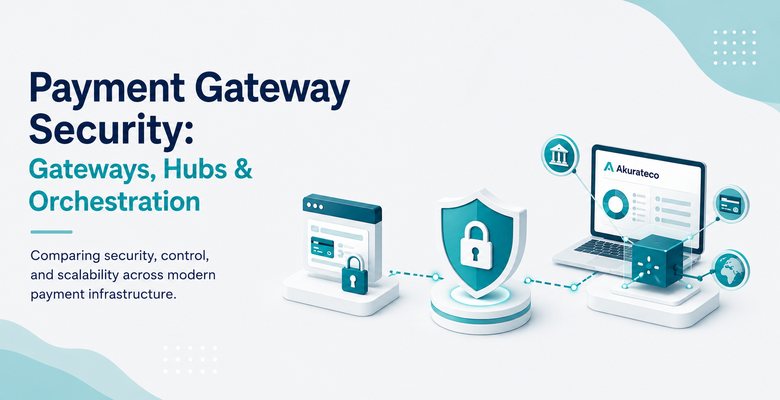
The systems solve different security problems. Gateways protect payment capture and transmission, orchestration platforms govern multi-provider acceptance flows, and payment hubs control enterprise payment initiation and bank connectivity.
| Security dimension | Payment gateway | Payment orchestration platform | Payment hub |
| Primary role | Transmit payment data for authorization | Manage and optimize payments across multiple providers | Centralize enterprise payment initiation and bank connectivity |
| Typical payment direction | Customer-to-merchant collections | Customer-to-merchant collections across multiple PSPs | Corporate, treasury, supplier, payroll, and bank payments |
| Sensitive assets | Card data, tokens, gateway credentials | Tokens, routing rules, provider credentials, transaction data | Beneficiary data, bank credentials, payment files, approval records |
| Main security advantage | Can isolate payment-data capture from merchant systems | Centralizes provider access, policy enforcement, tokenization, and monitoring | Standardizes approvals, bank connectivity, and payment release controls |
| Main architecture risk | Dependency on one gateway and limited cross-provider visibility | Large blast radius if the central control layer is compromised | Fraudulent payment initiation or unauthorized beneficiary changes |
| Critical controls | Encryption, tokenization, PCI DSS, 3DS, webhook security | API security, tenant isolation, token governance, RBAC, configuration approvals | Segregation of duties, maker-checker, message signing, beneficiary controls |
| Resilience priority | Gateway availability | Multi-provider failover and connector health | Reliable bank-channel and payment-file delivery |
| Best suited to | Merchants needing secure payment acceptance through one provider | Enterprises managing multiple PSPs, acquirers, methods, and markets | Treasury and finance teams managing bank and corporate payments |
The comparison should not be interpreted as a security ranking. A narrowly scoped gateway may have a smaller attack surface, while a properly implemented orchestration platform may provide stronger enterprise-wide governance.
The right choice depends on the payment flows that must be protected.
What Security Features Should Payment Infrastructure Include?
Secure payment infrastructure requires layered controls covering data, identity, applications, APIs, transactions, configuration, resilience, monitoring, and vendor governance. No single feature can compensate for weaknesses in the other layers.
1. Encryption and key management
Sensitive payment information should be protected both in transit and at rest.
The provider should explain:
- Which data is encrypted
- Where encryption begins and ends
- Who owns and operates the keys
- Whether hardware security modules are used
- How keys are rotated
- How access to keys is approved and monitored
- What data remains visible in logs, reports, and support tools
“Encrypted” is not a sufficient answer without a documented key-management model.
2. Tokenization
Tokenization replaces sensitive payment data with a reference value. It can limit the number of systems that need access to original card credentials and make recurring payments or multi-provider routing easier to manage.
Payment teams should distinguish between:
- Gateway tokens
- Merchant or orchestration vault tokens
- Acquirer tokens
- Network tokens
- Device or wallet tokens
A provider-specific token may simplify recurring payments through one PSP but create migration or routing limitations. A centralized or portable token strategy can provide more infrastructure flexibility.
Akurateco’s tokenization capabilities are relevant where merchants need to support recurring payments and avoid distributing card data across multiple provider integrations.
3. Strong identity and access management
The infrastructure should support:
- MFA for administrative users
- Role-based access control
- Least privilege
- SSO integration
- Separate production and test permissions
- Service-account controls
- Credential expiry and rotation
- Session monitoring
- Access review reports
- Immediate user revocation
Permissions should be granular enough to distinguish between viewing transactions, creating refunds, modifying routing, managing fraud rules, accessing reports, and administering users.
4. API and webhook security
Payment platforms depend on APIs, service accounts, callbacks, and webhooks. These connections should be treated as part of the core security boundary.
Required controls include:
- Strong API authentication
- Scoped credentials
- Mutual TLS where appropriate
- Request signing
- Timestamp and nonce validation
- Replay protection
- Rate limiting
- Schema validation
- Idempotency controls
- Webhook signature verification
- Secret rotation
- API version inventory
- Deprecation procedures
Third-party API responses should never be trusted solely because they originate from an integrated provider.
5. Secure routing and configuration governance
Routing rules affect where money and payment data travel. Access to create or modify those rules should be restricted and monitored.
A secure routing environment should include:
- Version history
- Change attribution
- Testing before deployment
- Staged releases
- Approval workflows
- Rollback capability
- Alerts for high-impact changes
- Separate permissions for creation and approval
The same controls should apply to cascading, retry, fraud, 3DS, and provider failover configurations.
6. Fraud prevention and transaction authentication
Payment security and fraud prevention are related but not identical. Infrastructure security protects systems and data; fraud tools assess whether the person or transaction should be trusted.
Relevant capabilities include:
- 3D Secure
- Device and behavioral signals
- Velocity rules
- BIN, country, IP, and address checks
- Risk scoring
- Allow and block lists
- Account takeover detection
- Card-testing detection
- Manual review
- Rule-performance monitoring
Fraud rules should be reviewed for false positives. A control that blocks legitimate customers may reduce fraud while also damaging approval rates and revenue.
Akurateco’s payment fraud prevention tools can be evaluated as part of the broader orchestration and risk-control layer.
7. Audit logs and observability
The system should record:
- Authentication attempts
- Permission changes
- Routing-rule changes
- Credential changes
- Refunds and reversals
- Token access
- Fraud-rule modifications
- Provider configuration changes
- Data exports
- Administrative support actions
Logs should be protected against unauthorized modification and exportable to the merchant’s SIEM or monitoring environment.
8. Resilience and disaster recovery
Availability is a security property in payment systems. A provider outage, certificate failure, bad deployment, or denial-of-service attack can interrupt revenue even without exposing data.
Payment teams should validate:
- Availability architecture
- Regional redundancy
- Recovery time objectives
- Recovery point objectives
- Backup testing
- Provider health monitoring
- Circuit breakers
- Message durability
- Automatic and manual failover
- Degraded-mode operation
- Disaster-recovery exercise frequency
Payment orchestration can support continuity by routing around an unavailable provider. However, failover should not bypass authentication, fraud, or compliance requirements.
9. Secure software development and vulnerability management
The provider should maintain a documented secure development lifecycle that includes:
- Code review
- Static and dynamic security testing
- Dependency scanning
- Secret detection
- Vulnerability management
- Penetration testing
- Patch procedures
- Environment separation
- Release approvals
- Software component inventory
- Incident-response processes
NIST’s Cybersecurity Framework 2.0 can provide a broader structure for governing, identifying, protecting, detecting, responding to, and recovering from cybersecurity risk.
10. Compliance and independent assurance
Relevant evidence may include:
- PCI DSS Attestation of Compliance
- Report on Compliance where applicable
- ISO 27001 certification
- SOC reports
- Penetration-test summaries
- Data-processing documentation
- Subprocessor information
- Business continuity evidence
- Incident-notification commitments
Compliance documents should be checked for scope, covered entities, covered locations, service boundaries, validity dates, and customer responsibilities.
How Should You Evaluate a Payment Infrastructure Provider?
Do not evaluate security by checking whether a vendor mentions PCI DSS, encryption, and tokenization. Ask for evidence showing how the platform protects your exact data flows, integrations, users, configurations, and operational processes.
A practical review should cover the following areas.
| Evaluation area | Questions to ask |
| Data flow | Where does payment data enter, travel, and leave the platform? |
| PCI scope | Which systems and responsibilities are covered by the provider’s assessment? |
| Tokenization | Who owns the tokens, where can detokenization occur, and can tokens be moved between providers? |
| Credentials | How are PSP keys, certificates, API secrets, and bank credentials stored and rotated? |
| Access | Can permissions be restricted by role, entity, merchant, region, action, and environment? |
| Configuration | Are routing, fraud, and provider changes versioned, approved, tested, and reversible? |
| APIs | Are requests signed, scoped, rate-limited, monitored, and protected against replay? |
| Webhooks | How are callback authenticity, delivery retries, ordering, and duplicate events handled? |
| Resilience | What happens if the platform, region, connector, PSP, or acquirer becomes unavailable? |
| Monitoring | Which security, transaction, and administrative events can be exported to your SIEM? |
| Incident response | How quickly must the vendor notify customers, and what evidence is provided? |
| Deployment | Are SaaS, dedicated, private-cloud, or on-premises models available where required? |
| Third parties | Which subprocessors and infrastructure providers have access to the service? |
| Testing | How frequently are penetration tests, disaster-recovery exercises, and access reviews performed? |
A vendor’s answers should map to the merchant’s actual architecture. A hosted checkout, mobile SDK, direct API, marketplace, and recurring billing environment may each produce a different security scope.
Common Payment Infrastructure Security Mistakes
The most common failures come from fragmented ownership, excessive access, insecure integrations, poorly governed configuration changes, and the assumption that vendor compliance transfers all responsibility to the merchant.
Treating PCI DSS as a complete security strategy
PCI DSS is essential for cardholder data protection, but it does not replace fraud controls, API security, business continuity, internal governance, or vendor-risk management.
Leaving old integrations active
Deprecated API credentials, unused webhooks, abandoned merchant accounts, and old provider connectors increase the attack surface.
Maintain an active inventory and remove integrations that no longer serve a business purpose.
Giving broad administrative access
Payment users often receive more access than their role requires. Permissions should be segmented between payment operations, customer support, finance, risk, engineering, and security.
Sending sensitive data into logs
Card numbers, authentication values, tokens, passwords, secrets, and personal data can leak through debugging, monitoring, support, and analytics systems.
Logging policies should be tested, not merely documented.
Failing to secure configuration changes
A routing or fraud-rule change can have an immediate impact across thousands of transactions. These changes should be subject to the same governance applied to production software.
Assuming more providers automatically means more resilience
Multiple PSPs improve resilience only when failover has been designed, tested, monitored, and protected from unsafe retries.
Poor retry logic can cause duplicate charges, bypass fraud decisions, increase costs, or send technically invalid transactions to another provider.
How Akurateco Supports Centralized Payment Security
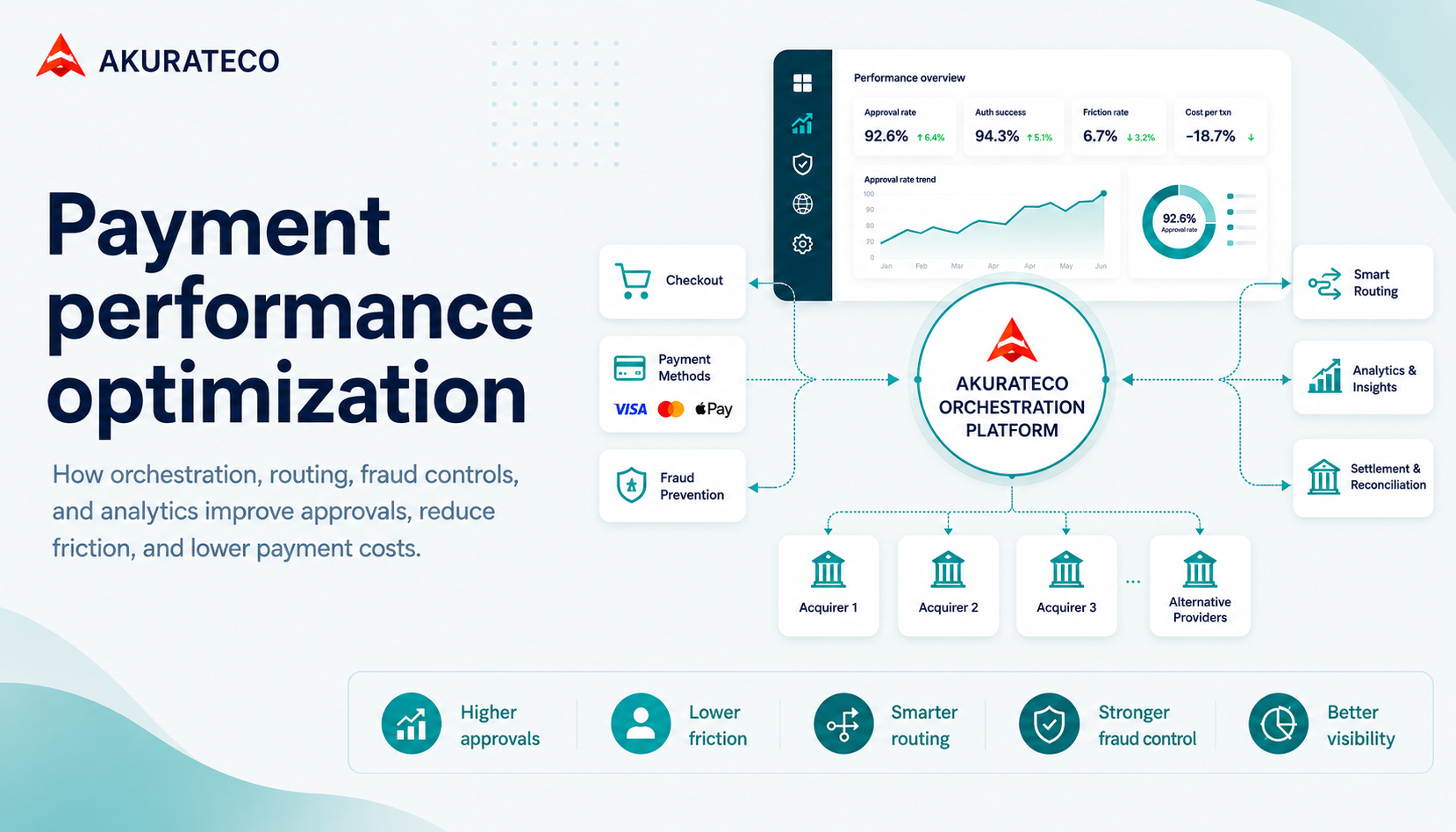
Akurateco can act as a centralized orchestration layer for enterprise merchants that need to manage provider integrations, payment routing, tokenization, fraud controls, reporting, and transaction visibility through one platform.
Instead of maintaining fragmented PSP integrations separately, merchants can use Akurateco’s payment orchestration platform to connect payment providers through one infrastructure layer.
Its orchestration capabilities include smart routing, cascading, provider integrations, tokenization, fraud controls, reporting, and payment management. Akurateco also offers SaaS, on-premises deployment options, and cloud-agnostic deployment models, allowing enterprises to evaluate the model that best fits their security, control, and data-residency requirements.
For enterprise payment teams, the relevant value is not simply connecting more PSPs. It is creating a more consistent control layer for payment data, routing decisions, user permissions, monitoring, and provider resilience.
Security responsibilities should still be documented between Akurateco, the merchant, connected PSPs, cloud providers, and other technology partners.
Conclusion
A payment gateway, payment orchestration platform, and payment hub protect different parts of the payment lifecycle.
Gateways concentrate on secure payment capture and authorization connectivity. Orchestration platforms coordinate customer payment flows across multiple providers. Payment hubs centralize corporate payment initiation, approvals, and bank connections.
The strongest architecture is not necessarily the one with the most security features. It is the one in which sensitive data is minimized, responsibilities are clear, access is restricted, configurations are governed, integrations are monitored, and failures can be contained without stopping the entire payment operation.
For enterprise merchants managing a complex multi-PSP environment, Akurateco can act as a payment orchestration partner that centralizes connectivity, routing, tokenization, fraud controls, reporting, and operational visibility without requiring the business to rebuild every payment integration independently.
FAQ
Are payment gateways secure?
Payment gateways can be secure when they use strong encryption, tokenization, controlled access, secure APIs, transaction authentication, monitoring, and PCI DSS-aligned processes. Security also depends on the merchant’s integration. A compliant gateway cannot protect insecure merchant accounts, exposed API credentials, unverified webhooks, vulnerable payment-page scripts, or excessive administrative access.
Is payment orchestration secure?
Payment orchestration can be secure and may improve enterprise-wide governance by centralizing tokenization, provider credentials, routing controls, monitoring, and access policies. Because the orchestration layer controls multiple payment flows, it must also provide strong tenant isolation, API security, configuration approvals, key management, audit logging, resilience, and tested incident-response processes.
What is the security difference between a gateway and an orchestration platform?
A gateway primarily secures the transmission of payment data to one processing environment. An orchestration platform manages connections to multiple gateways, PSPs, acquirers, and methods. It therefore needs gateway-level protections plus centralized token governance, connector security, routing controls, provider credential management, monitoring, failover, and cross-provider access policies.
Does payment orchestration reduce PCI DSS scope?
Payment orchestration and tokenization may reduce the number of merchant systems that handle raw card data, but they do not automatically remove all PCI DSS obligations. Scope depends on the integration, where account data is stored or processed, network connectivity, administrative access, token design, and which responsibilities are handled by the merchant and service provider.
What security features should payment infrastructure include?
Payment infrastructure should include encryption, tokenization, secure key management, MFA, granular access controls, protected APIs, signed webhooks, audit logs, routing-change governance, fraud controls, 3D Secure, vulnerability management, provider monitoring, disaster recovery, and incident response. These capabilities should be supported by current compliance evidence and clearly documented responsibility boundaries.
Is a centralized payment platform safer than separate PSP integrations?
A centralized platform can be safer because it reduces duplicated credentials, inconsistent integrations, fragmented monitoring, and separate administrative environments. However, it also becomes a critical control point. Its security depends on isolation, least-privilege access, configuration governance, API protection, operational resilience, and the organization’s ability to detect and contain a platform-level incident.